REVIEW · CANCÚN
PADI Open Water Diver Course
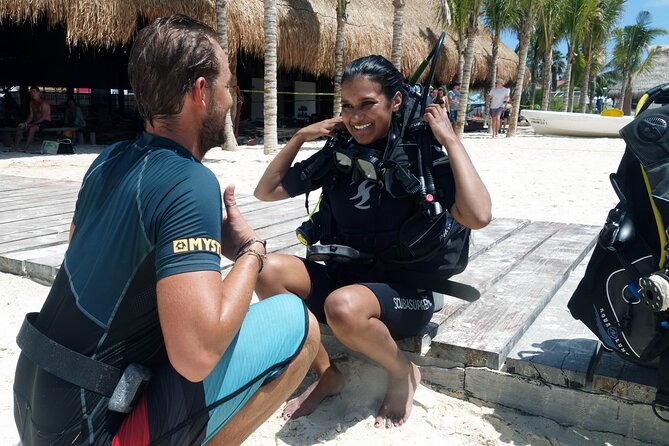
Isla Mujeres turns first-time scuba into real progress. This 2-day PADI Open Water Diver course runs through Pocna Dive Center, designed for complete beginners and capped at just 4 people. You’ll spend course time learning fundamentals and then do your underwater sessions at MUSA, the underwater museum with 500+ statues, with your guide helping you spot rare marine life.
What I really like is the coaching style you get from an instructor who stays calm under pressure. In one review, Javi was praised for giving the tools and knowledge needed to finish certification, and for staying supportive when challenges came up. I also like the small-group setup, because it makes it easier to ask questions, get feedback fast, and not feel like a number.
One consideration: this experience depends on good weather, and plans can shift if conditions aren’t suitable. If you’re the type who needs a fixed schedule with zero wiggle room, build in some flexibility.
In This Review
- Key highlights you’ll care about
- Isla Mujeres + MUSA: a smart way to start your Open Water Diver certification
- Two days of PADI training: what the course pacing means for beginners
- MUSA underwater museum: why 500+ statues are more than a photo stop
- Small group size (max 4): how that changes the lesson quality
- Instructor support you can feel: Javi’s calm, practical teaching
- Price and what you’re getting for $560
- Logistics that can make or break your first morning
- What to do before you show up for day one
- Who this course fits best
- Should you book the PADI Open Water Diver course with Pocna Dive Center?
- FAQ
- Where is the meeting point for the PADI Open Water Diver course?
- What time does the course start?
- How long is the course?
- How much does the course cost?
- What language is the course taught in?
- How many people are in the group?
- Where do you go underwater during the training?
- What are the cancellation rules if weather is poor?
Key highlights you’ll care about
- MUSA underwater museum (500+ statues): a memorable training setting with lots to look at underwater.
- Beginner-friendly PADI Open Water Diver: built for first-timers who want an official certification.
- Small group limit (4 travelers): more personal attention during your lessons.
- Instructor support that clicks: Javi’s approach is described as calm, supportive, and practical.
- Guided spotting of rare marine life: your guide is actively helping you notice what’s there.
Isla Mujeres + MUSA: a smart way to start your Open Water Diver certification
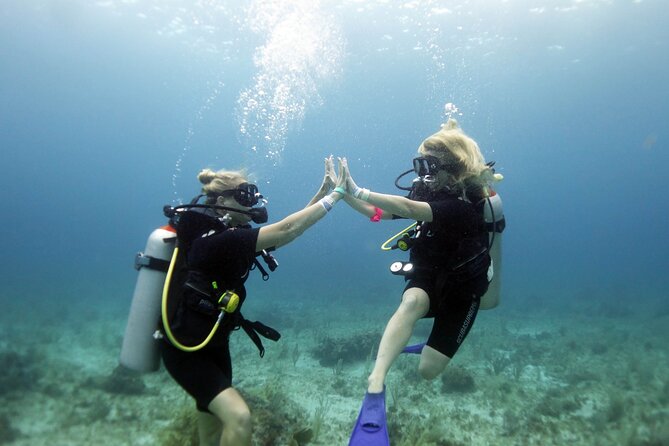
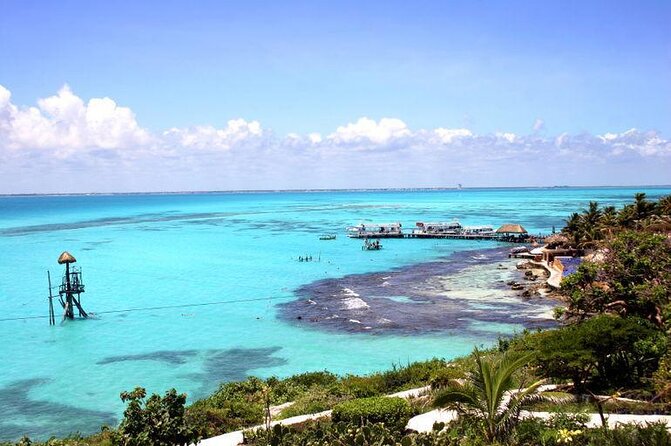
Isla Mujeres is a classic place to learn scuba skills because it’s a destination built for short trips and water time. For your first certification course, that matters. You want the vibe to feel relaxed and doable, not like you’re fighting logistics while you’re still learning basic control and confidence underwater.
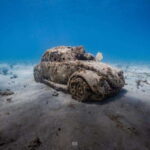
The big draw here is MUSA, the Underwater Museum of Art, with 500+ statues. A site like this changes the whole feel of your training. Instead of only focusing on technique, you’ll have something visual and strange in the best way to watch as you practice. That helps a beginner stay engaged, which is often half the battle when you’re learning buoyancy, breathing, and awareness all at once.
And there’s another reason MUSA fits an Open Water Diver course: the experience highlights that your guide increases your chances of spotting rare marine life. Even if you’ve never snorkeled, you can still learn to look with purpose, not just hope you see something. A good instructor will nudge your attention to what matters—body position, slow movements, and letting wildlife come to you.
Torn between a few? Here is where this one lands among the Isla Mujeres trips:
- Isla Mujeres Snorkeling Tour Adventure★ 5.0 · 1,746 reviews
- Whale Shark Adventure in Isla Mujeres and Cancun★ 5.0 · 951 reviews
- 3 Hours VIP Semiprivate Tour Isla Mujeres Full Snorkeling Experience★ 5.0 · 404 reviews
Two days of PADI training: what the course pacing means for beginners
This is a 2-day PADI Open Water Diver course. That time frame is important because a beginner often needs repeated practice, not one long crash session. With two days, you get a rhythm: learn and review, then apply what you practiced the previous day.
You’ll be using the PADI Open Water Diver eLearning component as part of the process. Practically, that’s a big deal for value and comfort. It means you can start learning concepts before you ever step into the water, and then your in-person time can focus more on skill-building rather than pure theory. For first-timers, cutting down the number of totally new things at once usually lowers stress.
The course is also offered in English, which helps if you want to ask direct questions and understand safety explanations without the extra mental load of translating.
The other pacing benefit: the tour includes a mobile ticket and runs on a schedule with a clear start time. You meet at 7:00 am at Matamoros 15 in Centro (Supmza. 001), then the activity ends back at the same meeting point. For a first certification, returning to the same place helps you stay oriented and keeps your day simpler.
MUSA underwater museum: why 500+ statues are more than a photo stop
MUSA is famous for its artwork, but your certification experience uses it for something even more useful: it gives your brain something to track while you work on control underwater.
When you go underwater for the first time, your attention can scatter. You’re monitoring air, buoyancy, direction, and your comfort level—plus you’re trying to remember safety steps. Add MUSA’s 500+ statues, and you suddenly have natural “landmarks” for where to look. That can help you avoid the beginner habit of frantically scanning everything at once.
This course also emphasizes your guide’s help in spotting rare marine life. In real terms, that means you shouldn’t treat wildlife as luck. Your instructor will guide you in how to move slowly, hold position, and observe calmly. That’s valuable beyond one day, because it becomes your long-term habit once you’re certified.
One more point: MUSA is a setting where you might feel less pressure to “perform.” You can focus on steady breathing and relaxed movement, while the statues create a storyline for your underwater time.
Small group size (max 4): how that changes the lesson quality
The course has a maximum of 4 travelers. On paper, that’s just a number. In practice, it’s a big quality lever.
First, it makes you easier to teach. When the instructor isn’t juggling a bigger group, they can spot issues sooner—like how you’re holding yourself in the water or how quickly you’re getting distracted. Second, it usually means more chances to ask questions without feeling rushed.
This shows up clearly in the review-style praise for the instructor. Javi is described as providing the tools and knowledge needed to complete certification, and for being extremely supportive when challenges appeared. That kind of support is easier in a smaller group because the instructor can stay close to each student’s learning curve.
If you’re someone who learns best with feedback, this small size is a plus. If you prefer a more social, party-like atmosphere, this isn’t that kind of course—but for certification, quiet focus is often the better trade.
Instructor support you can feel: Javi’s calm, practical teaching
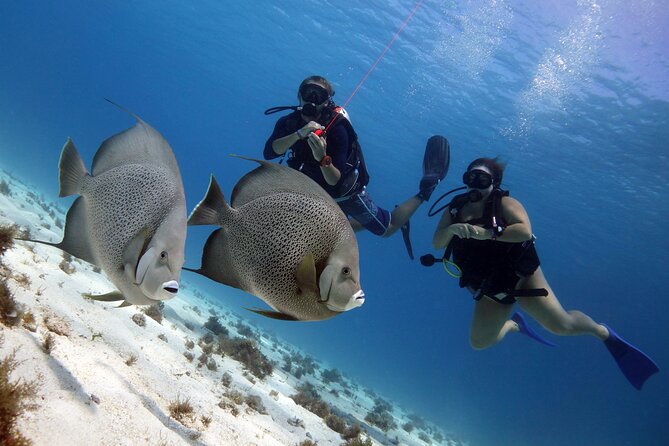
One review really captures what you’re hoping for in your instructor: confidence with calm follow-through.
In the feedback, Javi is called an outstanding instructor who gave clear knowledge and the practical tools needed to finish certification. The review also mentions he stayed supportive when challenges came up and helped with advice that kept things steady and manageable.
That matters because the hardest part of a first scuba certification course is often emotional as much as technical. If you panic when you struggle, learning slows down. But if your instructor has a calm approach and gives you a step-by-step path through difficulties, you tend to regain control faster.
So when you’re booking, I’d look at this as more than just the course brand name. You’re paying for coaching, not only equipment time. For first-time students, an instructor’s tone can be the difference between feeling stuck and feeling like progress is happening.
Price and what you’re getting for $560
At $560 per person for a 2-day PADI Open Water Diver course, you’re paying for several things at once: a recognized certification pathway, in-person instruction, and underwater sessions tied to a specific location like MUSA.
The value angle that stands out here is that you’re not buying a vague “try it” experience. You’re working toward official certification. That means the lesson time is structured, the safety framework is formal, and you’ll leave with a credential—assuming you complete the required course components.
Also, the small group limit helps justify the cost. When you’re in a group of up to 4, the instructor’s attention is not diluted. You’re likely to get more direct feedback than you would on a bigger roster.
Finally, the MUSA setting isn’t just entertainment. It’s the underwater environment where you practice what you’re learning. If you’re going to learn scuba fundamentals anyway, it’s sensible to do it in a place where you have something interesting to focus on and where rare marine life spotting is part of what the guide helps you with.
Logistics that can make or break your first morning
This starts early: 7:00 am at Matamoros 15, Centro – Supmza. 001, 77400 Isla Mujeres, Q.R., Mexico. Early start days are normal for water activities, but for a beginner, being well-rested is not optional. If you’re tired, you’ll feel it in your breathing and confidence in the water.
You’ll also want to remember that this activity ends back at the meeting point, which makes planning easier. The tour notes it’s near public transportation, so if you don’t have your own vehicle, you still have options.
Two other practical realities:
- You should have a moderate physical fitness level. This doesn’t mean you need to be an athlete, but it does mean you should be comfortable with the basic effort of being out for a couple of days and moving with purpose.
- The experience requires good weather. If conditions are poor, it can be canceled, and you’re offered a different date or a full refund.
For most people, the best strategy is simple: schedule no heavy commitments after day one, and keep your second day flexible.
What to do before you show up for day one
Because the course uses PADI Open Water Diver eLearning, you’ll get the best experience if you treat that as part of your homework (in the good way). The better you understand the basics ahead of time, the more your instructor’s time can focus on what you need in the water.
Even though the details of what you’ll bring aren’t provided here, you can still prepare smartly by packing for an early morning and sun. Isla Mujeres is a place where being comfortable on deck matters, especially when you’re new and still learning how to regulate yourself.
If you’re nervous, that’s normal. My advice: decide ahead of time that you’re here to learn, not to be perfect on day one. If something feels hard, a calm instructor approach (like Javi’s) can help you fix it rather than freeze you.
Who this course fits best
This is a strong match if:
- You’re a complete beginner who wants real PADI Open Water Diver certification.
- You want an instructor who gives tools, clear knowledge, and supportive coaching when things get tricky (Javi is specifically mentioned for that style).
- You like structured learning but also want the underwater time to be visually interesting, thanks to MUSA and its 500+ statues.
It’s not necessarily the best fit if:
- You can’t handle schedule changes due to weather.
- You need huge daily certainty with zero variability.
- You prefer large groups and lots of social energy over focused instruction.
Should you book the PADI Open Water Diver course with Pocna Dive Center?
If you want the fastest path from zero scuba experience to official certification, and you like the idea of practicing in a location like MUSA (with 500+ statues and wildlife attention from your guide), I think it’s a smart booking.
The biggest reasons to feel confident are the small group size (max 4), the beginner-friendly structure tied to PADI Open Water Diver eLearning, and the clear instructor praise for calm, supportive teaching—especially Javi.
Book it if you can give yourself two calm mornings/days, handle early start time, and accept that weather may shift the schedule. If that works for you, this is a very solid way to start your scuba journey with real credibility and an underwater setting you’ll remember.
FAQ
Where is the meeting point for the PADI Open Water Diver course?
You’ll meet at Matamoros 15, Centro – Supmza. 001, 77400 Isla Mujeres, Q.R., Mexico.
What time does the course start?
The start time is 7:00 am.
How long is the course?
The duration is about 2 days.
How much does the course cost?
The price is $560.00 per person.
What language is the course taught in?
The course is offered in English.
How many people are in the group?
The maximum group size is 4 travelers.
Where do you go underwater during the training?
You’ll dive in the MUSA area, which is the Underwater Museum of Art with 500+ statues.
What are the cancellation rules if weather is poor?
You can cancel for free up to 24 hours in advance for a full refund. The activity also requires good weather; if it’s canceled due to poor weather, you’ll be offered a different date or a full refund.
More Tour Reviews in Isla Mujeres
- Isla Mujeres Snorkeling Tour Adventure★ 5.0 · 1,746 reviews
- Whale Shark Adventure in Isla Mujeres and Cancun★ 5.0 · 951 reviews
- 3 Hours VIP Semiprivate Tour Isla Mujeres Full Snorkeling Experience★ 5.0 · 404 reviews
- Isla Mujeres Snorkeling Adventure at the Underwater Museum★ 4.5 · 219 reviews
- Scuba diving at MUSA the underwater museum for certified divers★ 5.0 · 102 reviews
- Isla Mujeres, Cancún Private Sunset Trip★ 5.0 · 79 reviews